Learn interesting facts about the Dayak tribe of Kalimantan, which is rich in culture, tradition, and history, making it one of the unique and influential tribes in Indonesia.
The Dayak tribe is one of the largest ethnic groups inhabiting the island of Borneo, which is divided between Indonesia and Malaysia.
As the indigenous people of Kalimantan, the Dayak have a very interesting cultural richness, with unique traditions, a strong social system, and a strong connection to nature.
Although the Dayak tribe consists of various sub-tribes with different languages and customs, they have similarities in many aspects of life that make them a unique tribe.
In this article, we will explore 10 interesting facts about the Dayak tribe of Kalimantan that many people may not know.
1. Origin of the name “Dayak”
The name “Dayak” itself is not actually the official name for this tribe. The term “Dayak” comes from the word “dayak” which means “upstream” or “inland”. In the past, this term was used by coastal communities to refer to tribes living in the interior of Kalimantan.
Traditionally, the Dayak people live in remote areas, far from the centers of government and culture, which is why they are often associated with a simpler and more natural life.
Despite this, the Dayak Tribe has played a major role in the history and development of Kalimantan, both in Indonesia and Malaysia.
2. The Dayak Tribe Has Many Sub-Tribes
The Dayak tribe is not a homogeneous ethnic group, but rather consists of various sub-tribes that have their own cultures and languages. Some of the well-known Dayak sub-tribes include the Iban Dayak, Kenyah Dayak, Kayan Dayak, Tidung Dayak, and Punan Dayak.
Each Dayak sub-tribe has a different language, tradition, and way of life, but still upholds the same values, such as customs that maintain harmony with nature and others. The diversity of these sub-tribes makes the Dayak a very dynamic and culturally rich group .
3. Dayak life is closely related to nature
The Dayak tribe has a very close relationship with nature, especially with the forest. They are known as hunters and gatherers, with local wisdom that governs how they utilize natural resources.
For the Dayak tribe, the forest is not only a place to find food, but is also considered a part of their spiritual life.
Various traditional rituals carried out by the Dayak tribe often involve relationships with nature, such as offerings to spirits who are thought to guard the forest and the animals within it.
4. Traditional House “Longhouse”
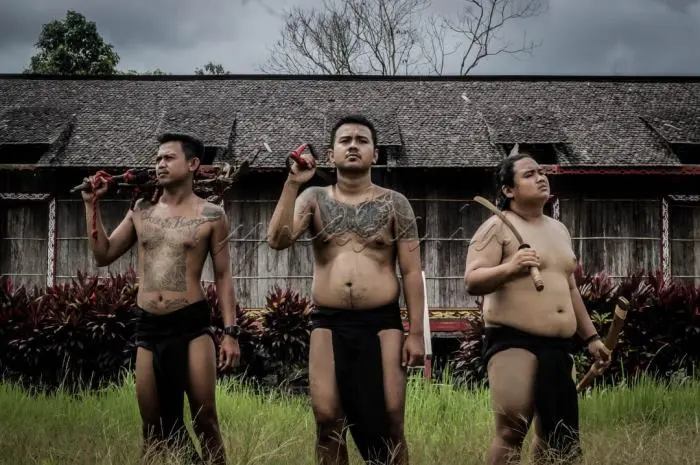
One of the typical characteristics of Dayak tribal life is their traditional house which is called “longhouse” or “long house”. A longhouse is a large building that can accommodate many families.
These longhouses are generally built with wooden structures and thatched roofs, and are located along rivers or strategic areas.
The longhouse is not only a place to live, but also functions as a center for social and traditional activities. The Dayak people live together under one roof, share space with each other, and maintain strong family ties.
5. Unique Carving and Weaving Arts
The Dayak tribe has very famous carving and weaving arts, especially in making everyday equipment and traditional clothing. Typical Dayak carvings are often found on objects such as shields, weapons, and their traditional houses.
These carving motifs usually depict the natural world and ancestral spirits. In addition, the Dayak tribe is also known for their expertise in weaving traditional fabrics used as traditional clothing.
Dayak weaving is often decorated with geometric patterns that are rich in symbolic meaning, reflecting the depth of their philosophy of life.
6. Traditional Rituals and Ceremonies that are Still Preserved
The Dayak tribe has various traditional rituals and ceremonies that are still preserved to this day. One of the famous rituals is “Tiwah”, a funeral ceremony performed by the Dayak Ngaju tribe in Central Kalimantan.
This ritual involves the process of moving the bones of the deceased into a stone grave or coffin placed on a high place. In addition, there is also the “Ngabang” ceremony or a welcoming ceremony for honored guests that involves dance, music, and art performances.
All these traditional ceremonies not only involve spiritual aspects but also serve as a symbol of respect for ancestors and nature.
7. Skills in Handicrafts
In addition to carving and weaving, the Dayak tribe is also known for its expertise in making other handicrafts, such as masks, jewelry, and traditional weapons.
Dayak masks, which are used in various traditional ceremonies, often depict mythological characters or guardian spirits believed in by the community.
Traditional Dayak jewelry, such as necklaces and bracelets, are usually made from natural materials, such as wood, bone, and metal, and are decorated with ornaments that depict strength and courage.
Traditional weapons , such as the mandau (a type of sword), are also an important part of Dayak culture, often decorated with intricate carvings and used in both ceremonies and war.
8. Strong Social System
The Dayak tribe has a highly structured social system, where each individual in society has a clear role. Traditional chiefs or community leaders are usually respected and have the authority to make decisions related to daily life and traditional ceremonies.
However, the Dayak tribe also emphasizes the importance of mutual cooperation and cooperation in social life. In Dayak society, the values of togetherness, respect for elders, and maintaining balance with nature are highly respected principles.
9. Animism and Local Religion Beliefs
Most Dayak tribes adhere to animism, namely belief in the spirits of nature and ancestors. They believe that everything in nature, including trees, rocks, and rivers, has a spirit that must be respected and protected.
Although currently many Dayak tribe members have converted to Islam or Christianity, the majority still maintain their old traditions and beliefs. Some Dayak tribes also carry out religious ceremonies that combine religious teachings with animist elements.
10. Changes and Challenges of Modernization
Like many other indigenous peoples, the Dayak people now face challenges due to modernization and social change. While many aspects of their culture are still maintained, the younger generation of Dayaks are increasingly exposed to global culture and modern lifestyles .
This has caused a shift in their way of life, especially in large cities such as Pontianak and Palangkaraya. However, many Dayaks are trying to preserve their traditions through cultural education, community organizations, and environmental conservation efforts.
The Dayak tribe of Kalimantan is one of the tribes that has extraordinary cultural richness. With a long history and diverse traditions, they continue to maintain a way of life that is thick with natural values and spirituality.
Despite facing the challenges of globalization, the Dayak tribe remains a symbol of strength, wisdom, and connection with nature. From longhouses to meaningful ceremonies, the Dayak people make a major contribution to Indonesia’s rich and colorful cultural mosaic.
Getting to know more about the Osing Tribe is a step towards understanding how important it is to maintain cultural diversity in preserving national identity.