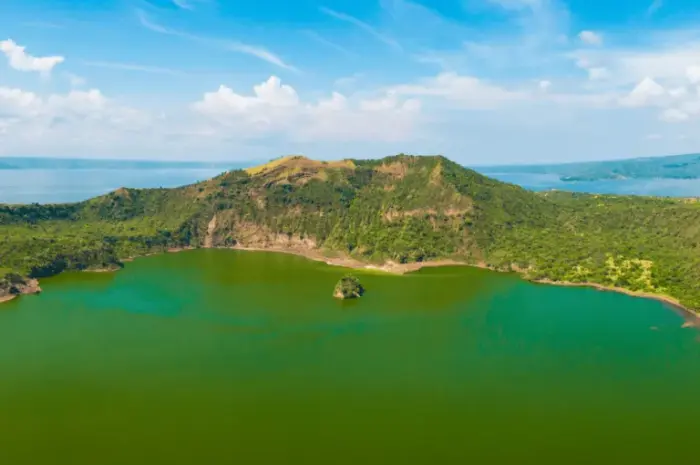
Vulcan Point in the Philippines is a small island located in the middle of the Taal Volcano Crater Lake, offering a unique geological landscape of an island within an island within a volcano, making it an extraordinary natural phenomenon.
Vulcan Point is one of the geological wonders found in the Philippines, a small island located inside the Main Crater Lake, which is inside the Taal Volcano.
This natural phenomenon is a rare example of an island located inside a lake inside a volcano, surrounded by another larger lake.
With its stunning views and interesting geological background, Vulcan Point has become one of the top attractions in the Philippines. This small island not only offers stunning natural beauty but also holds an amazing geological history.
What is Vulcan Point?
Vulcan Point is a small island located in the middle of the Main Crater Lake, which is inside the Taal Volcano. The Taal Volcano itself is located inside Taal Lake on the island of Luzon, in the Philippines.
The unique concept that makes it so interesting is that Vulcan Point is an island inside a lake that is inside a larger volcano, which is itself inside another lake.
In other words, it is an island inside a lake that is inside a volcano, in the middle of a larger lake, inside the main island of the Philippines.
This extremely rare natural phenomenon is also known as a “third level island”, and other than the Philippines, similar islands have been found in other places such as Victoria Island in Canada.
Vulcan Point was formed when the crater of Taal Volcano filled with water, forming the Main Crater Lake. From this calm turquoise water, the peak of the volcano’s cinder cone rises, forming a small island known as Vulcan Point.
The existence of Vulcan Point provides a clear illustration of how volcanic and geological processes can shape extraordinary natural structures.
History of the Formation of Vulcan Point
To understand how Vulcan Point was formed, we need to go back even further, about 500,000 years ago, when two tectonic plates collided, creating a chain of volcanoes along the island of Luzon.
Taal, one of the most active volcanoes in the Philippines, was formed by the movement of these tectonic plates.
A major eruption in the 18th century caused the structural support of the earth’s crust to collapse, creating a large caldera that later filled with water, forming Taal Lake.
In 1911, the eruption of Taal Volcano further lowered the elevation of the islands within the caldera, one of which was Vulcan Point, which led to the formation of the Main Crater Lake.
Previously, this island was just the peak of a volcanic cone submerged in lake water. Over the years, Taal Volcano has erupted many times, creating dramatic changes to the surrounding geological formations.
The last eruption in January 2020 caused drastic changes to the lake, even causing the Main Crater Lake to dry up. Nevertheless, the geological wonder of Vulcan Point persisted and the lake soon filled again.
Geological Wonders and Unique Landscapes
Vulcan Point is a rare example of an island located within a lake within a volcano, creating a truly unique landscape.
With turquoise waters surrounding the small island, Vulcan Point provides a clear glimpse into the geological processes taking place beneath the earth’s surface.
Although the island is small, its presence is a symbol of the incredible power of nature, which can create unusual geological structures.
The Main Crater Lake, where Vulcan Point is located, is a lake that formed inside the crater of Taal Volcano. This lake is very rich in sulfur content and is a unique place in terms of geology.
Historical volcanic eruptions have caused major changes in the geological structure of this area, creating natural phenomena that are not found in many places in the world.
The process of formation and development of Vulcan Point and the Main Crater Lake is strong evidence of the power of nature to change the shape of the earth.
The Third Tier Island Phenomenon
The phenomenon of third-level islands, which is a category for islands located within lakes within volcanoes, is quite rare in the world. Vulcan Point is one of the best examples of this geological phenomenon.
Its uniqueness lies in the layers of soil and water that form it, which gives an idea of how nature can create amazing structures with complex natural processes.
This island is one example of many islands that can be found within volcanic crater lakes, and proves how important geology is in shaping the natural landscape.
Vulcan Point is not only famous for its beauty but also for its geological potential. Its existence provides insight into the formation and changes that occur on earth through volcanic eruptions and volcanic phenomena.
Through geological studies, Vulcan Point helps scientists better understand the natural processes that underlie the formation of small islands like this.
Tourist Activities Around Vulcan Point
Apart from being a geological wonder, Vulcan Point and its surroundings are also interesting to visit for tourists who are interested in nature and geology.
Although there is not much access available to get directly to the island, tourists can enjoy the stunning views from around the Main Crater Lake, which offers a different and very memorable experience.
Some of the activities that can be enjoyed around the area include a sightseeing trip to Taal Volcano and Taal Lake, which provides deeper insight into the volcanic history of the area.
Tourists can also enjoy the view from above, which allows them to see Vulcan Point against the backdrop of the larger Taal Lake.
A trip to Vulcan Point or just enjoying the surrounding views is a very rewarding experience, especially for those interested in geological and natural wonders.
Conservation and Environmental Challenges
Despite its extraordinary natural beauty, the area around Vulcan Point and Taal Volcano also faces major challenges related to frequent volcanic activity.
Volcanic eruptions throughout history have caused damage to infrastructure and the surrounding environment, as well as threatening the safety of local populations.
Therefore, conservation efforts and active monitoring of volcanic activity are very important to ensure the safety and survival of the people living around the area.
Vulcan Point is one of the Philippines’ amazing natural wonders, forming a unique geological phenomenon that is rarely found anywhere else.
This small island, located inside the Main Crater Lake, which is located inside the Taal Volcano, shows how powerful the forces of nature can be in forming amazing geological structures.
With its long geological history and its continued presence, Palmyra Atoll is a natural tourist destination that not only amazes the eyes but also provides a deep insight into the incredible power of nature.